Source 6 pieces insulating boots tester for Electrical Safety, Industrial Testing, and Compliance
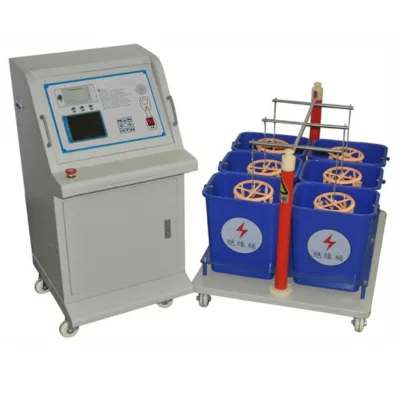
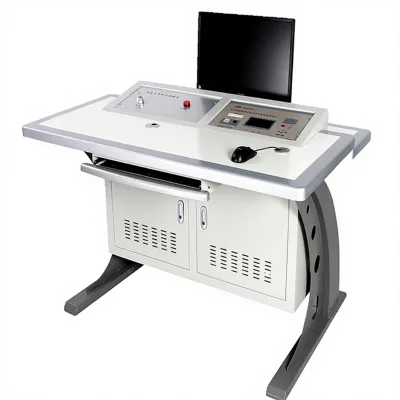
Find 30 listings for the 6 pieces insulating boots tester to compare voltage ranges, accuracy grades, and computer control features. Buyers can evaluate static load methods and digital display options from manufacturers in Hubei, China.
Key considerations
Products List




Comprehensive Sourcing Guide
Strategic Sourcing Guide for Insulating Boots Testers
Procuring specialized electrical safety testing equipment, specifically for insulating boots and gloves, requires a rigorous approach that balances technical precision with supply chain reliability. The core keyword "6 pieces insulating boots tester" indicates a specific configuration where the equipment is designed to evaluate multiple pairs of protective gear simultaneously or in a rapid sequence. In the context of high-voltage safety compliance, the accuracy of the testing apparatus is paramount, as it directly correlates to the safety of workers in electrical utilities and industrial sectors. This guide synthesizes available product attributes and industry standards to provide a comprehensive framework for buyers evaluating potential suppliers and specifications for these critical testing machines.
Technical Specifications and Operational Parameters
When evaluating a 6-piece insulating boots tester, the primary focus must be on the electrical output capabilities and the control mechanisms that ensure test consistency. The equipment typically operates on a standard industrial power supply, with observed specifications indicating a requirement for AC 220V, 50Hz/60Hz input. However, for heavier industrial models, power inputs may extend to AC 380V, necessitating a verification of the facility's power infrastructure before procurement. The core function of these machines is to apply a high voltage to the insulating material to verify its dielectric strength.
The voltage output range is a critical differentiator among models. Available data suggests units capable of an output voltage range of AC 0-250V, with specific high-voltage configurations reaching up to 50kV or 100kV depending on the model designation. For instance, specific model configurations like the CYJY-104D series indicate capacities ranging from 3kVA to 50kVA, with specific variants rated at 10kVA. The measurement voltage capability is equally vital; reliable units are observed to measure up to AC 0-100kV. The accuracy of these measurements is typically maintained within a tolerance of ±1.0%, ensuring that the breakdown voltage is recorded with high fidelity.
The testing methodology for these machines often involves a static load approach, where the voltage is ramped up or held constant to test the insulation integrity. The load way is frequently electronic, allowing for precise control over the test duration and voltage application. Digital displays are standard, providing real-time feedback on leakage current, timing, and voltage levels. The leakage current resolution is a key metric, with observed values as fine as 0.1mA, while the test error for leakage current typically falls between 1.0% and 5.0%. Furthermore, the equipment often features a digital display timing function with a range of 10 to 990 seconds, allowing for customizable test durations based on specific safety protocols.
Compliance, Certification, and Standard Verification
In the realm of electrical safety testing, compliance is not merely a regulatory formality but a fundamental requirement for liability and safety assurance. Buyers must verify that the testing equipment itself meets recognized international standards. While specific standards can vary by region, the presence of a CE Certificate is a documented attribute for certain models in the market, indicating conformity with health, safety, and environmental protection standards for products sold within the European Economic Area.
The production standards for these machines are often customizable, allowing manufacturers to tailor the device to specific national or industry requirements. However, the physical dimensions and structural integrity must align with safety norms. For example, a standard footprint for a unit of this class might be approximately 730mm by 730mm by 1945mm. Buyers should ensure that the "standard" listed by the supplier refers to the manufacturing process or design specification rather than a physical dimension, as confusion between the two can lead to installation issues.
Furthermore, the testing function itself must align with the requirements for insulating boots and gloves. The equipment is explicitly designed for the function of testing these specific items, often utilizing a static load method. It is crucial to verify that the machine can handle the specific voltage withstand requirements of the boots being tested, which can range up to 35kV for certain classes of protective gear. The "Accuracy Grade" is another critical compliance factor, with advanced models offering computer control to ensure the 0.1 grade precision required for certification testing.
Cost Drivers and Pricing Structures
The pricing for insulating boots testers is influenced by several distinct factors, primarily revolving around capacity, automation, and customization. The observed price range for these units spans from $600 to $20,000 USD, a wide spectrum that reflects the diversity in capabilities. The lower end of the market typically includes units with lower kVA ratings, such as 3kVA, and basic digital displays. In contrast, the higher price points correlate with high-capacity models (up to 50kVA), advanced computer control systems, and comprehensive safety features.
Capacity is a primary cost driver. Units with a rated output capacity of 10kVA or higher generally command a premium due to the more robust transformers and control circuitry required. Additionally, the "Mass Scope of Workpiece" capability influences cost; machines designed to handle workpieces weighing up to 900kg or with a maximum capacity under 1000KN require heavier, more expensive structural components. The inclusion of computer control and digital data storage (e.g., 60 groups of data storage) also adds to the cost, as these features require sophisticated microprocessors and memory systems.
Customization is another significant factor. While many suppliers offer "Customized" standards and OEM/ODM support, the specific requirements for voltage ranges, dimensions, or testing protocols can increase the unit price. The packaging method, such as a wooden box with foam or wrapping film, is a standard logistical cost but can vary based on the fragility of the internal components. Buyers should note that the Minimum Order Quantity (MOQ) for these specialized machines is typically 1 unit, allowing for flexible procurement without the need for bulk purchasing agreements.
Typical Applications and Operational Scenarios
The primary application of a 6-piece insulating boots tester is in the quality assurance and safety compliance testing of personal protective equipment (PPE) used in high-voltage environments. These machines are essential for electrical utilities, power generation plants, and industrial facilities where workers are exposed to electrical hazards. The specific function of testing insulated boots and gloves ensures that the dielectric strength of the rubber or composite materials has not degraded due to age, wear, or environmental exposure.
The "6 pieces" designation suggests a high-throughput capability, allowing for the simultaneous or sequential testing of multiple pairs of boots. This is particularly useful in large-scale manufacturing settings or in safety departments that need to certify large inventories of PPE regularly. The equipment often features a measuring station configuration, with some models offering up to 8 stations, which further enhances throughput. The ability to store 60 groups of test data allows for comprehensive record-keeping, which is vital for audit trails and compliance reporting.
In addition to manufacturing quality control, these testers are used in periodic re-certification of PPE. Workers' safety gear must be tested at regular intervals to ensure continued protection. The digital timing function and precise leakage current measurement enable technicians to perform these tests efficiently and accurately. The equipment's ability to handle a mass scope of workpiece up to 900kg ensures it can accommodate heavy-duty industrial boots, which are often bulkier and heavier than standard protective gear.
Supplier Evaluation and Geographic Considerations
When evaluating suppliers for insulating boots testers, geographic origin and manufacturing capability are important indicators of supply chain stability. Many of the observed products originate from Hubei, China, with specific manufacturing hubs in Wuhan. This region is known for its industrial base in electrical equipment and machinery. Buyers should verify the specific origin of the unit, as "Hubei, China" and "Wuhan, China" may refer to the same broader manufacturing region but could imply different logistical considerations.
Supplier evaluation should also focus on the level of customization support offered. The market data indicates that suppliers provide OEM, OBM, and ODM support, allowing buyers to brand the equipment or modify specifications to meet unique needs. The "brand name" associated with these products, such as "GOLD," may be a generic descriptor or a specific manufacturer identifier, and buyers should confirm the actual corporate entity behind the brand.
The "prod_standard" being customizable is a strong indicator of a flexible supplier. However, buyers must ensure that the customization does not compromise the fundamental safety and accuracy of the machine. The presence of a CE Certificate is a positive signal, but it should be verified as a current, valid certification for the specific model being purchased. Additionally, the supplier's ability to provide detailed technical documentation, including the "prod_model" (e.g., CYJY-104D-5/100), is essential for maintenance and future upgrades.
Quality Control and Long-Term Procurement Considerations
Ensuring the long-term reliability of an insulating boots tester requires a focus on quality control measures during the manufacturing and delivery process. The packaging is a critical aspect of this, with units typically shipped in wooden boxes with foam or wrapping film to protect sensitive electronic components and high-voltage transformers during transit. The weight of the equipment, ranging from 0-100kg for lighter models to 100-500kg for heavier industrial units, dictates the handling requirements and the need for specialized logistics.
For long-term procurement, buyers should consider the maintenance requirements and the availability of spare parts. The computer control systems and digital displays are complex components that may require specialized servicing. The ability to store 60 groups of data suggests that the software is robust, but buyers should inquire about software update policies and data export capabilities. The "Accuracy Grade" of 0 and the "Control: Computer Control" features imply a high level of automation, which reduces human error but increases the dependency on the integrity of the control system.
Furthermore, the "Impact Measurement Frequency" being less than 1% and the "Impact Resolution" of 1n indicate a high level of precision in the testing process. Buyers should verify that these specifications are maintained over the lifespan of the machine through regular calibration. The "Leakage Current Test Error" range of 1.0~5.0% should be monitored to ensure the machine remains within acceptable tolerances. Finally, the "Laser Height Adjustable Range" of 1000-1100mm (relative to the head mold) highlights the need for precise mechanical alignment, which should be checked during the initial installation and periodically thereafter to ensure consistent test results.
FAQs
What is the voltage accuracy for this tester?
The voltage accuracy is maintained at ±1.0 percent for reliable testing results. This precision ensures that breakdown voltages are recorded with high fidelity for safety compliance verification.
Can the machine measure up to 100kV?
Yes, the measurement voltage capability extends up to AC 0-100kV for high-voltage applications. This range supports testing various classes of insulating boots and gloves effectively.
Which power supply voltage does the unit require?
The unit operates on AC 220V at 50Hz or 60Hz for standard models. Some heavier industrial configurations may require AC 380V, so verify your facility power infrastructure before purchase.
How many test pairs can the device handle?
The equipment is designed to test three pairs of gloves or insulated boots in a single run. This configuration supports efficient batch testing for quality assurance workflows.
What is the leakage current resolution of the system?
The system offers a leakage current resolution of 0.1mA for precise measurements. This high resolution allows technicians to detect minute insulation failures during the testing process.
Can the product standard be customized for my needs?
Yes, the product standard can be customized to meet specific national or industry requirements. Suppliers also offer OEM, OBM, and ODM support for tailored manufacturing solutions.
What is the typical weight range for these machines?
The weight ranges from 0-100kg for lighter models up to 100-500kg for heavy industrial units. This variation depends on the capacity and structural components required for the specific model.